Getting a coronary stent is often described as "fixing" the heart — but the stent is really the beginning of a new chapter, not the end of the story. What you do in the weeks, months, and years afterwards matters enormously for your long-term health. Here is what every stent patient should understand.
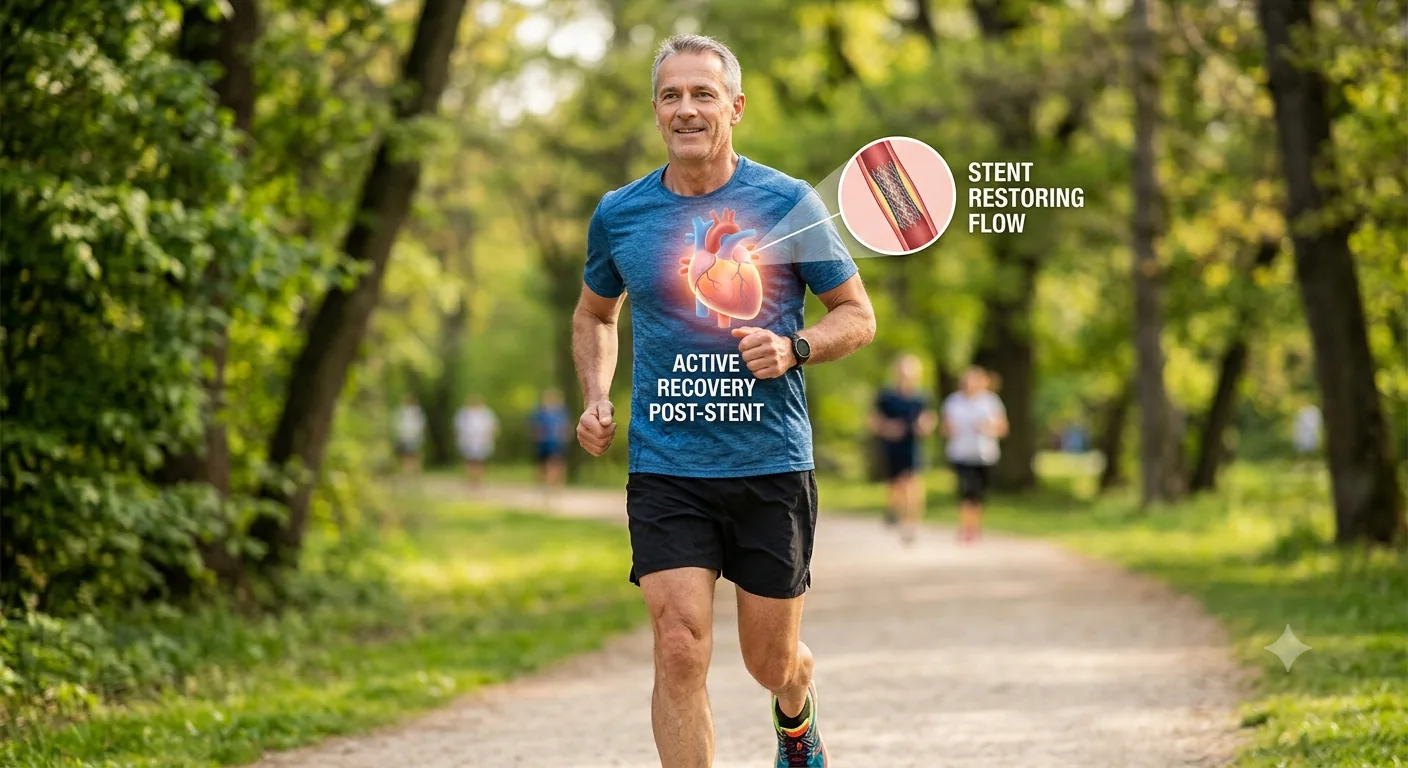
A coronary stent restores blood flow through a narrowed or blocked artery. It is a genuinely life-improving, and often life-saving, treatment. But the underlying condition — coronary artery disease — does not disappear when the stent goes in. Managing it properly afterwards is what determines your long-term outcome, and much of that management is in your hands.
Dual Antiplatelet Therapy (DAPT)
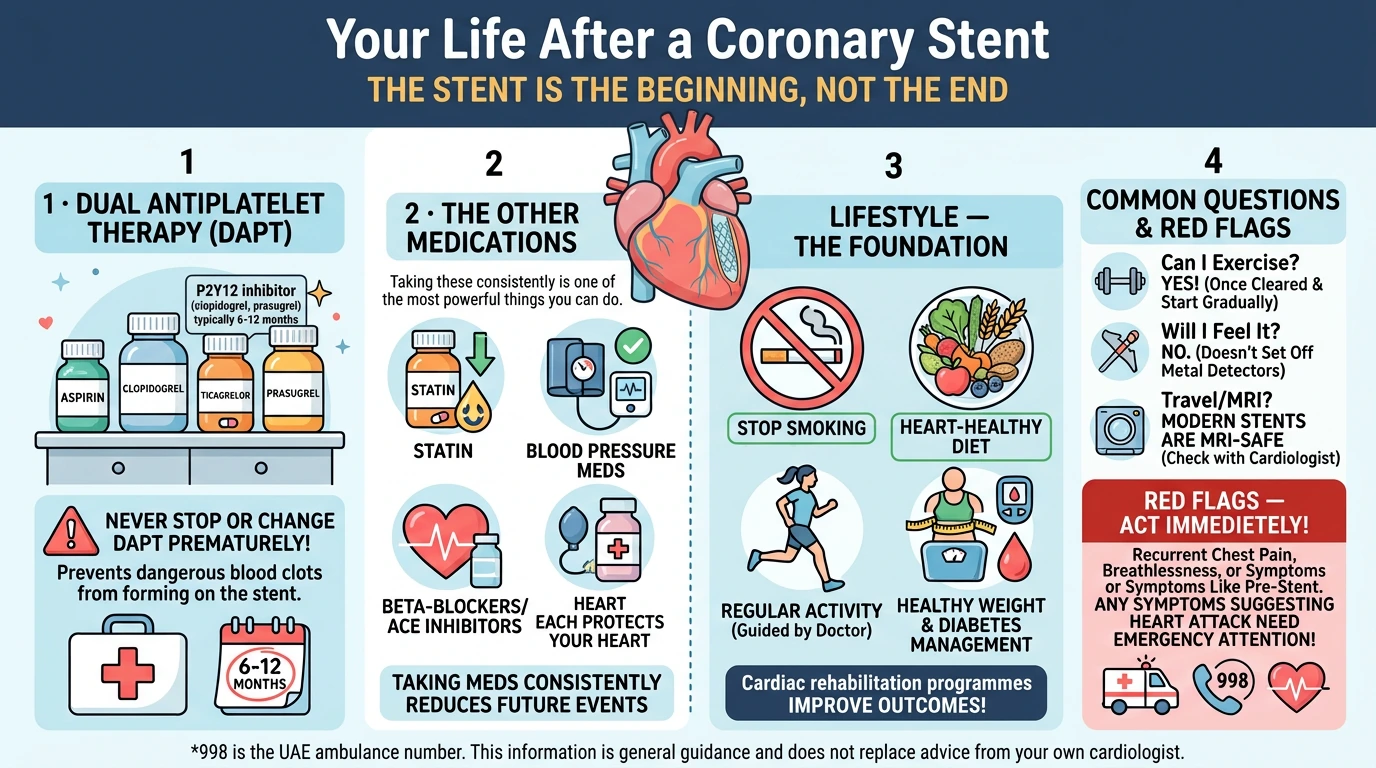
The single most important medication after a stent is dual antiplatelet therapy — usually aspirin combined with a second antiplatelet drug such as clopidogrel, ticagrelor, or prasugrel. These medications prevent blood clots from forming on the newly placed stent while it becomes incorporated into the artery wall. Stopping them prematurely is one of the most dangerous things a stent patient can do, as it can cause a sudden clot in the stent — a serious and potentially fatal event.
The duration of DAPT varies depending on your stent, your clinical situation, and your bleeding risk — commonly six to twelve months, sometimes shorter or longer. Never stop these medications without discussing it with your cardiologist first, including before any planned surgery or dental work.
"The stent opens the artery. But it is the medications, the lifestyle, and the follow-up that keep it open — and protect the rest of your heart for years to come."
— Dr. Zaidoun Hajali, MD FSCAI FRCPThe Other Medications
Beyond antiplatelet therapy, most stent patients are prescribed a statin to lower cholesterol and stabilise the disease throughout the coronary arteries — not just at the stent site. Many also take medications for blood pressure, and some take beta-blockers or ACE inhibitors to protect the heart. Each of these has a specific, evidence-based role in preventing future events. Taking them consistently is one of the most powerful things you can do.
Lifestyle — The Foundation
No medication replaces the fundamentals. Stopping smoking is the single most impactful change a stent patient can make — it dramatically reduces the risk of further events. A heart-healthy diet, regular physical activity (guided by your cardiologist, often through cardiac rehabilitation), maintaining a healthy weight, managing diabetes, and controlling blood pressure all work together to slow the underlying disease. Cardiac rehabilitation programmes, where available, are strongly recommended and genuinely improve outcomes.
Common Questions After Discharge
Can I exercise? Yes — and you should, once cleared. Activity is protective. Start gradually and follow your cardiologist's or rehabilitation team's guidance.
Will I feel the stent? No. Once healed, you will not feel it, and it does not set off airport metal detectors.
Can I travel or have an MRI? Modern stents are MRI-safe, and travel is generally fine once you have recovered. Check with your cardiologist about timing.
What symptoms should prompt concern? Recurrence of chest pain, breathlessness, or symptoms similar to those before your stent should be reported promptly. And any symptoms suggestive of a heart attack require emergency attention immediately.
- A stent restores blood flow, but coronary artery disease continues — long-term management determines your outcome.
- Dual antiplatelet therapy (DAPT) is critical after a stent; never stop it early without consulting your cardiologist.
- Statins, blood pressure medications, and other drugs each play an evidence-based role in preventing future events.
- Stopping smoking is the single most impactful lifestyle change; diet, activity, and cardiac rehab all matter.
- Report any recurrence of chest pain or breathlessness promptly; treat suspected heart attack symptoms as an emergency.